Department of Electrical & Electronics Engineering

Comprehensive Program Features & Benefits

In today's world, electricity forms the heartbeat of human life in all its spheres of activities. With a very few exceptions all industries and businesses depend on electricity and its uninterrupted quality supply. Fast-growing economies like India are naturally power-hungry due to expanding industrial sector and rapid urbanization.

  • With every electrical device coming with electronic components that use low power electricity the knowledge domain of electrical engineers has expanded including electronics engineering.
  • Electronic circuits and ICs and microprocessors and microcontrollers have become a part of everyday technical life of an electrical engineer.
  • Hence the curriculum for the Bachelor programme under this department provides for the study of both Electrical Engineering and Electronics Engineering (EEE) with the major focus on the former. EEE engineer is thus a dual-discipline expert though more fitted to become a professional Electrical Engineer.
Placement 1
Placement 2
Placement 3

Driving Academic Progress Through Clear Goals

Our Vision

To be a global leader in electrical and electronics engineering education and training by creating competent graduates who are highly skilled in their chosen fields, successfully involved in innovative research, entrepreneurship and have a strong commitment to social development.

Our Mission
  • To provide quality technical education using modern tools in the field of Electrical and Electronics Engineering.
  • To create competent and skilled professionals who are well trained to design, implement and control electrical efficient system.
  • To strive for continuous improvement in the quality of academics and inculcate Professional ethical values among the students and the faculty members.
Other Details

Engineering Programs Designed for Excellence

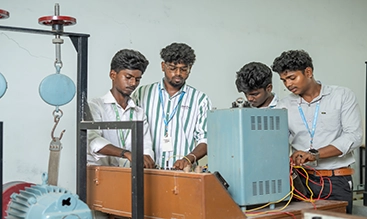
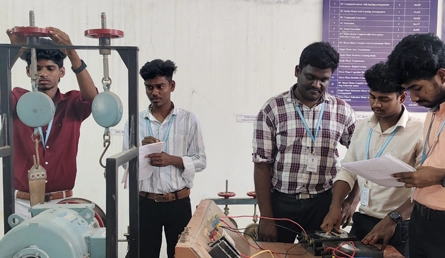
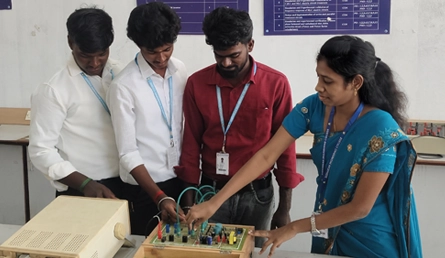
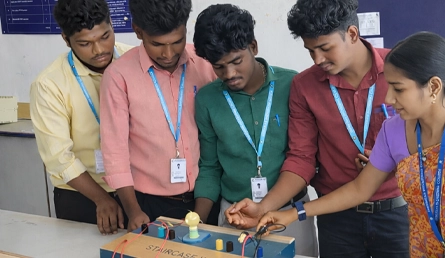
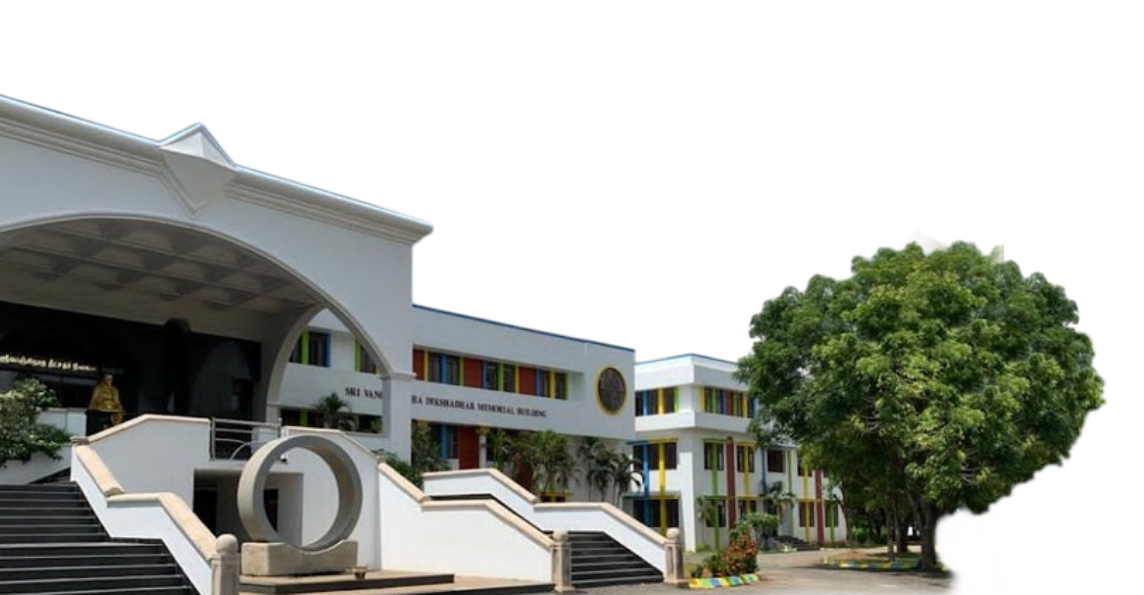
The Department of Electrical and Electronics Engineering in Sudharsan Engineering College rises meritoriously to meet the needs of the prescribed curriculum and to provide one of the best engineering learning environment to its students. The department's laboratories have numerous latest machines, instruments, and training sets to give the students a one-to-one hands-on practical experience.

Laboratory Details Electrical & Electronics Engineering
“Knowledge is of no value unless you put it into practice” – Anton Chekhov

The Department Has Six Well-Equipped Laboratories

  • Electrical Machines Laboratory
  • Electric Circuits Laboratory
  • Power Electronics Laboratory
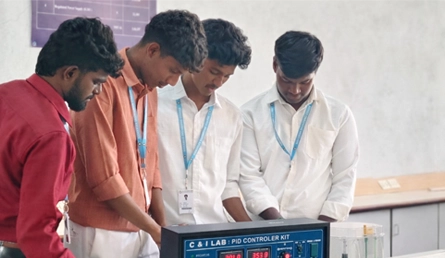
  • Control and Instrumentation Laboratory
  • Power System Simulation Laboratory
  • Makerspace Laboratory
1.Electrical Machines Laboratory (Area of the Lab = 285sq.m)

Electrical Machines lab consists of machines and all are mounted in industrial type of assembly to give the students industrial feel.

We have well equipped lab to provide experimental and hands-on experience to the detailed study of characteristic and operational aspects of machines.

Major Equipments
1. DC Shunt Generator 2. AC Generator
3. DC Compound Generator 4. DC Shunt Motor
5. DC Series Motor with Loading Arrangement 6. DC Compound motor with loading arrangement
7. DC Shunt Motor Coupled with Three phase Induction Generator 8. DC Shunt Motor Coupled with Synchronous Motor
9. Single Phase Auto Transformer 10. Single Phase Transformer
11. Single Phase Resistive Loading Bank 12. Three Phase Resistive Loading Bank
13. DC Shunt Motor Coupled with Three phase Slip ring Induction motor 14. Single Phase Induction Motor with Loading Arrangement
15. Three Phase Induction Motor with Loading Arrangement 16. Three Phase Capacitor Bank
17. Tachometer -Digital/Analog
2.Electric Circuits Laboratory (Area of the Lab = 285sq.m)

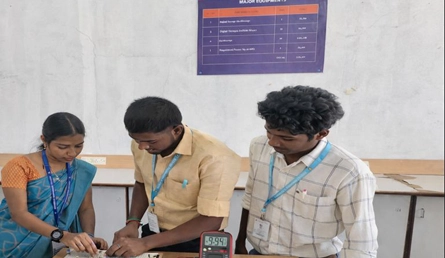
The Electrical Circuits Laboratory assists the students to impart with essential knowledge of electrical and electronic circuit design and analysis and provide hands on experience to design different electrical and electronic circuits

This Lab gives the practical learning and use of various instruments like Multimeter, Oscilloscopes, Function Generators, Wattmeter’s etc.

Major Equipments
1. Digital Storage Oscilloscope 2. Cathode Ray Oscilloscope
3. Function Generator (MHz Range) 4. Regulated Power Supply (0-30V)
3.Power Electronics Laboratory (Area of the Lab = 119.21 sq.m)

The Power Electronics laboratory is use to study the characteristics of switching devices and its applications in rectifiers, AC voltage controllers, inverter and choppers.

The lab facilitates faculty and students who are conducting research, industry sponsored projects in power converters

Major Equipments
1. AC Voltage Controller 2. IGBT Chopper
3. Step Down / Step Up Chopper using MOSFET 4. MOSFET Based Step Up & Step Down Choppers
5. CRO 6. Resonant DC-DC Converter
7. Single phase SCR Based Fully Controlled Converter 8. Single phase Half Controlled converter
9. Single phase PWM Inverter 10. Three phase PWM Inverter
4.Control and Instrumentation Laboratory (Area of the Lab =142.84 sq.m)

This lab is equipped with high-speed processor to provide training in the field of simulation.

The lab facilitates basic knowledge in obtaining the open loop and closed loop responses to understand the concept of stability of control systems.

Major Equipments
1. Personal Computers (Intel Core i5 or i7, 500 GB, 8 GB RAM)
2. Server (Intel Core i7, 2 TB, 8 GB RAM or higher) (High Speed Processor)
3. Software: EMTP / ETAP / CYME/ MIPOWER / any Power system simulation software
5.Power System Simulation Laboratory (Area of the Lab =142.84 sq.m)

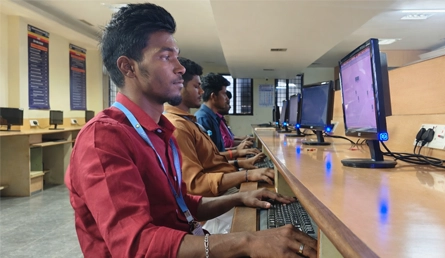
This lab is equipped with high-speed processor to provide training in the field of simulation.

Students can practically verify several concepts and procedures learned in power system modelling and analysis.

Major Equipments
1. Personal Computers (Intel Core i5 or i7, 500 GB, 8 GB RAM)
2. Server (Intel Core i7, 2 TB, 8 GB RAM or higher) (High Speed Processor)
3. Software: EMTP / ETAP / CYME/ MIPOWER / any Power system simulation software
6.Makerspace Laboratory (Area of the Lab =142.84 sq.m)

Students can understand how to safely and effectively work with electricity, which can be used in many ways.

Students can understand the house wiring and electrical connections and learn how to keep your home safe and reliable.

Major Equipments
1.Fuses, Miniature Circuit Breakers and Distribution Box
2.Three phase house wiring setup
3.Ceiling Fan Setup
4.Calling Bell Setup
5.Motors
5.Uninterruptible Power Supply & Batteries

Library Details Electrical & Electronics Engineering

"The library is a temple of learning, a palace of wisdom, a paradise of the mind"

Welcome to the EEE Department Library which is one of the support services of Central Library.

Library Working Hours

Monday to Saturday: 9.30 A.M to 4.20 P.M

Books
""Books are good company, in sad times and happy times, for books are people – people who have managed to stay alive by hiding between the covers of a book." ― E.B. White
The Library has the following resources
No. of Books 200
No. of UG Project Reports 118
No. of PG Project Reports 16
CD / VCD 01
PROGRAM EDUCATIONAL OBJECTIVES (PEOs)
  • Find employment in Core Electrical and Electronics Engineering and service sectors.
  • Get elevated to technical lead position and lead the organization competitively.
  • Enter into higher studies leading to post-graduate and research degrees. Become consultant and provide solutions to the practical problems of core organization.
  • Become an entrepreneur and be part of electrical and electronics product and service industries.
PROGRAM SPECIFIC OUTCOMES (PSOs)

On completion of Electrical and Electronics Engineering program, the student will have the following Program Specific Outcomes.

  • Analyze, design, and develop electrical circuits and systems for various industrial and societal requirements.
  • Utilize modern tools and techniques for solving complex problems in electrical and electronic systems and provide sustainable solutions.
  • Upskill with rapid advancements in the field of Electrical Engineering and exhibit research aptitude, work effectively as team and uphold ethical practices.
PROGRAM OUTCOMES (POs)
  • Engineering knowledge: Apply math, science, and engineering fundamentals to complex problems.
  • Problem analysis: Identify and analyze complex problems using research and sustainability principles.
  • Design Solutions: Design systems and processes considering health, safety, cost,culture, and environment.
  • Investigations: Use experiments, modelling, and data analysis to reach valid conclusions.
  • Engineering Tools: Apply modern tools for modelling and problem- solving, recognizing their limits.
  • Society & Environment: Assess societal, legal, and environmental impacts of engineering solutions.
  • Ethics: Commit to ethics, human values, diversity, and legal compliance.
  • Teamwork: Work effectively as an individual and in multidisciplinary teams.
  • Communication: Communicate clearly in reports, presentations, and documentation across diverse groups.
  • Management & Finance: Apply management and economic principles in projects and teamwork.
  • Lifelong Learning: Engage in continuous learning, adapt to new technologies, and think critically.
COURSE OUTCOMES (POs)
Course Outcome 2017
Course Outcome 2021
Course Outcome 2025
R & D Cell Electrical & Electronics Engineering
"If we knew what we were doing, it wouldn't be called research, would it?" - Albert Einstein
Sanctioned R&D Projects :
S.No. Name of the Scheme Amount Applied (in Lakhs) Sanctioned by
1 Modernization of power System simulation Lab Using MATLAB 7.10ab 10.0 AICTE, New Delhi
2 Modernization of Power Electronics Lab I Using PSIM 9.0 6.5 AICTE, New Delhi
3 National Conference on Advances in Power, Energy and Control Systems (APECS) 1.0 AICTE, New Delhi
4 Seminar Grant on 'Reactive power Compensation using STATCOM' 1.0 AICTE, New Delhi
5 Seminar Grant on 'Applications Of Power Electronics in Renewable Energy Sources' 1.0 AICTE, New Delhi
DEPARTMENT OF ELECTRICAL AND ELECTRONICS ENGINEERING
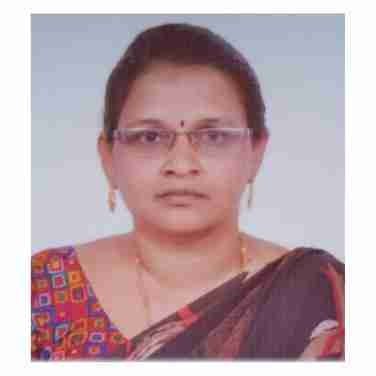
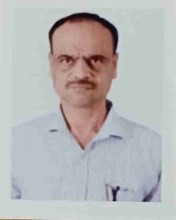
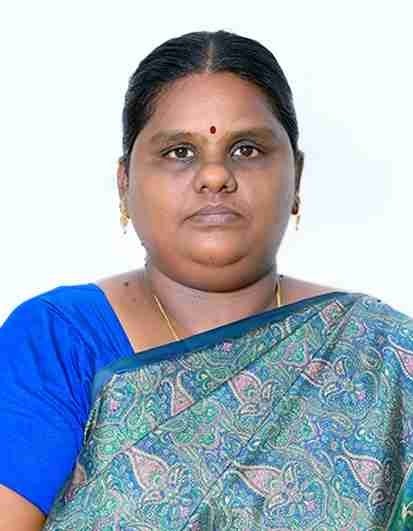
Sl.No. NAME OF THE FACULTY DESIGNATION QUALIFICATION PHOTO
1 MR.JEEVANANTHAM.R ASSISTANT PROFESSOR & HEAD OF THE DEPARTMENT B.E ELECTRICAL AND ELECTRONICS ENGINEERING
M.E POWER SYSTEMS ENGINEERING
(PH.D) ELECTRICAL ENGINEERING
2 MS.HEMILA HALAND.S ASSISTANT PROFESSOR B.E ELECTRICAL AND ELECTRONICS ENGINEERING
M.E POWER SYSTEMS ENGINEERING
(PH.D) ELECTRICAL ENGINEERING
3 MRS.AMAL PHILOMIYA.L ASSISTANT PROFESSOR B.E ELECTRICAL AND ELECTRONICS ENGINEERING
M.E POWER ELECTRONICS AND DRIVES
4 MRS.NAGALAKSHMI.R ASSISTANT PROFESSOR B.E ELECTRICAL AND ELECTRONICS ENGINEERING
M.E ELECTRICAL DRIVES AND EMBEDDED CONTROL
5 MR.SRIDHAR.V ASSISTANT PROFESSOR B.E ELECTRICAL AND ELECTRONICS ENGINEERING
M.E POWER ELECTRONICS AND DRIVES
6 MRS.LAKSHMI LAUVANYA.K ASSISTANT PROFESSOR B.E ELECTRICAL AND ELECTRONICS ENGINEERING
M.TECH POWER SYSTEMS
7 MS.INDHUMATHI.G ASSISTANT PROFESSOR B.E. – ELECTRICAL AND ELECTRONICS ENGINEERING
M.E. – POWER ELECTRONICS AND DRIVES